support@polopackaging.com
 +1 (703) 249-9428
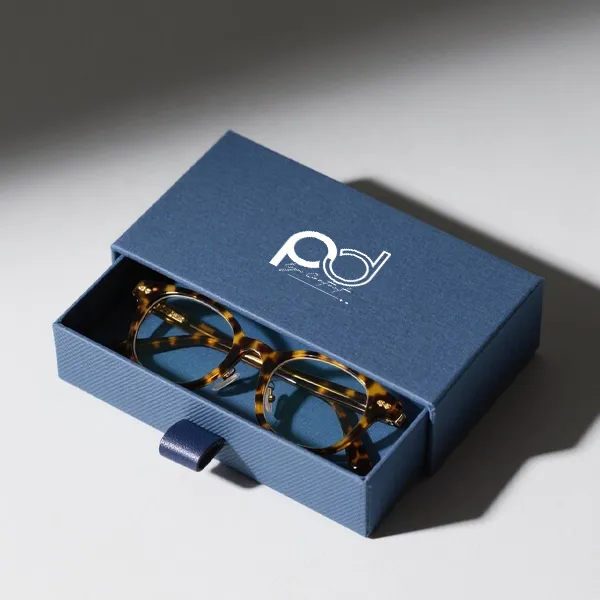
Stock Boxes vs. Custom Printed Packaging: Is the Extra Cost Worth the ROI?
Stock Boxes vs. Custom Printed Packaging: Is the Extra Cost Worth the ROI?
As a new business, you are always in a battle between two columns on your spreadsheet: expenses and revenue. Each dollar that is expended must have a purpose of existence. The shipment of your products one day takes you to a great intersection. Are you loyal to the ugly, inexpensive, dependable, boring box? Or plunge into pre-printed packages, which will be costly initially?
It is the same old story, price vs value.
In the case you ask an accountant, he or she may say that the plain brown box is the smarter box. It is more affordable, it shields the product, and it gets the task done. However, a marketer will say a plain box is an opportunity wasted, which might come at the cost of future sales.
We deal with companies at all levels of development at Polo Packaging. We have already witnessed that, whereas the custom packaging is more expensive per unit, the Return on Investment (ROI) may be a game-changer.
Let us counter the actual difference between stock and custom and see whether that additional investment is actually worth it
The Case for the Plain Stock Box: Utility First
Generally, there is nothing wrong with a regular stock box or one we call RSC - Regular Slotted Container.
Stock packaging will be a savior and a new one, trying out a new product idea, or operating on razor-thin margins. It is easy to find, can be purchased in small parts at not too high costs, and all it does is get your product to the destination in one piece.
Nevertheless, the negative aspect of the stock box is that its employment ceases as soon as it arrives on the doorstep. It's forgettable. It appears similar to the other simple packaging that is next to it and the subscription box across the street.
When you use these boxes, you are only sending your product to customers, not offering them an experience.
Why Custom Packaging Is The Brand Ambassador
Custom packaging, be it a full-print mailer bag or a slick product box with a soft finish, is not just a box. It is a tangible display of your brand.
The situation is different when a customer gets a personalized package. It moves on to an occurrence rather than an act of transaction. You are informing the customer: We are concerned with the details, and we appreciate your business.
But cozy emotions do not pay the bill. Then, we shall discuss hard numbers and the real ROI. What is the source of the value?
1. The ROI of First Impressions and Its Perceived Value
People make judgments based on the cover of the books. It's unavoidable.
Suppose you have ordered a $150 work of art watch.
Scenario A: It comes in a simple brown and somewhat dented cardboard box filled with excess bubble wrap.
Scenario B: It will come with a matte black cardboard box with the brand logo printed in gold foil. On the inside, the watch is mounted on a dedicated insert.
What watch seems to be worth 150 dollars?
High-quality packaging will give an immediate boost to the perceived value of your product. Luxury products are able to fetch a higher price. That personalized box would usually pay back completely through being capable of remaining at a higher price point with your merchandise without a client doubting their choice.
2. The "Unboxing" Phenomenon A Free Marketing Tool
Free marketing is the greatest motivation for contemporary packaging ROI. We are in the era of Instagram Reels and TikTok unboxing.
Individuals enjoy telling aesthetically satisfying stories. In case your packaging is special, pretty, or smart, your clients will be your marketing force. They take the photo, mark your brand, and leave it to their hundreds or thousands of followers.
That is natural, natural social evidence, which you cannot obtain through normal advertisement.
Imagine that a custom box adds an additional 1.50 to your expenses, but you get a customer who passes a story that attracts two new paying customers, what is the payback rate of your invested 1.50? It's massive. An ordinary brown box will hardly ever be posted on Instagram.
3. The Importance of Customer Retention:
The cost of getting a new customer is five to twenty-five times higher than retaining one. The main secret of profit is not only to receive the first sale but also the second and the third one.
Tailor-made packaging generates an emotional attachment. It develops a feeling of rewarding the customer back- when you provide an excellent service to the customer, the customer would want to reciprocate the experience (usually by making a future purchase).
Investing in the experience of the unboxing, you are investing in customer loyalty. You are decreasing "churn." Even an increment of your repeat purchase rate by 10 percent under custom packaging would result in a skyrocketing lifetime value of your customer base, and the cost of the boxes would be recouped easily.
Addressing the Elephant in the Room: The Cost
Numerous small business entrepreneurs stand in competition with famous brands or with an industrial supplier going big and getting sticker shock. They expect customers to go into ordering 5,000 boxes, a down payment of thousands.
It was before; however, the industry has transformed.
With the development of digital printing technology, custom packaging has become more accessible than ever, and it is of high quality. In the case of Polo Packaging, we have made it a business to ensure we assist developing businesses move forward and outgrow their stock boxes without necessarily draining the bank. Our minimum order quantities (MOQs) are lower than those of other firms, and therefore, you do not tie up all your money in stocks.
The Final Verdict:
The question is, does the additional cost mean ROI?
Stick with Stock Boxes If:
- You are at the absolute infancy of the stage of proving the concept.
- Your product is entirely utilitarian (e.g., selling bulk screws to contractors).
- One literally has no marketing budget.
Use Custom Packaging In Case:
We are developing a consumer-facing\ brand (DTC, e-commerce, boutique).
- Rivals are having their own custom packaging (you do not want to lose out on looking like the low-cost choice).
- You would like to spread word of mouth and social sharing.
- You wish to rationalize the high price point of your products.